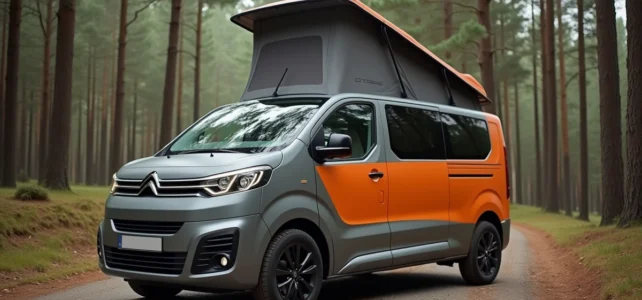
The Campster is based on the Citroën SpaceTourer (Jumpy) platform, which gives it a mechanical foundation shared with the Peugeot Traveller and the Toyota ProAce. Pössl, the German manufacturer responsible for the layout, adds a pop-up roof, a retractable kitchen unit, and a modular design intended to alternate between daily use and getaways.
Most online content focuses on the equipment list or comparisons with the Volkswagen California, but user feedback tells a more nuanced story.
Mechanical reliability of the BlueHDI and Citroën after-sales service: a recurring weak point
Negative reviews of the Campster do not solely target the Pössl layout. A significant portion of the criticisms relates to the Citroën base itself. On Trustpilot, recent feedback about the Citroën network describes breakdowns in new or low-mileage vehicles, and after-sales service is deemed slow to respond.
The BlueHDI engine, whether in the mid-range or high-end version, frequently comes up in discussions. The issues mentioned involve the AdBlue system, the particulate filter, and, in certain model years, the engine management electronics. These are not defects unique to the Campster, but they directly affect the experience of owners who find themselves making repeated trips to the dealership.
By summarizing the reviews on the Citroën Campster, we find that overall satisfaction depends as much on the quality of the local dealer as on the vehicle itself. A well-supported owner is forgiving of a technical recall. An owner left to fend for themselves after a breakdown on the highway will not return.
Citroën Campster in daily life: height, parking, and urban compromises
The gap between the promise of vanlife and the reality of mixed city-travel use is a topic that mainstream articles often skim over. The Campster, with its pop-up roof in the low position, fits into most underground parking lots. This is a decisive advantage over traditional converted vans like the Fiat Ducato, which are stuck at the two-meter height limit.
On the other hand, the interior height once the roof is raised remains modest. Taller users report a feeling of confinement in the kitchen area, and the sleeping area in the pop-up roof requires more of a squeeze than a proper setup. For a couple, this works fine. For a family with young children, prolonged cohabitation puts the concept to the test.
Parking and local regulations
Parking a converted vehicle in the city is not trivial. The legal distinction between parking and camping leads to frequent confusion: setting up a folding table or deploying an awning is enough, in some municipalities, to reclassify a simple stop as wild camping. Local restrictions often limit parking to 24 or 48 hours, with a national tolerance that can extend up to 7 days depending on the case.
The Campster remains a lightweight vehicle under 3.5 tons, keeping it within the B license framework and exempting it from the specific technical inspection for VASP. However, low emission zones (ZFE) continue to apply, and an older generation BlueHDI could find itself excluded from certain city centers in the medium term.
Pössl layout of the Campster: what users like and what they find problematic
Modularity is the word that comes up most in positive feedback. The sliding and reclining rear bench allows for a quick transition from a five-seat road configuration to a double sleeping area with just a few adjustments. The integrated kitchen unit, with stove and sink, meets basic needs without turning the vehicle into a motorhome.
Critiques, however, focus on usage details that only long-term owners identify:
- The thermal insulation of the pop-up roof is deemed insufficient once temperatures drop below ten degrees, making autumn nights uncomfortable without additional heating
- Storage remains limited compared to a larger converted van, forcing strict choices about the onboard equipment
- The interior finishes of the Pössl layout (hinges, clips, coverings) age faster than the mechanics, with body noises reported after just a few tens of thousands of kilometers
We recommend that used buyers systematically check the condition of the pop-up roof seals and the operation of the lifting mechanism, as replacements can represent a significant expense.
Campster against competitors: compact van or converted van
The Campster occupies a very particular segment. It does not compete with a converted Fiat Ducato in terms of living space, nor with a traditional MPV in terms of road comfort. Its strength lies in compromise, and this compromise is precisely what divides users.
Compared to the Volkswagen California, the Campster offers a more accessible entry price and a less costly mechanical base to maintain at a Citroën or Peugeot network. Against compact vans from Ford (Nugget) or Renault (Trafic converted by independent bodybuilders), it offers a finished product, with a clear manufacturer warranty.
Users who keep their Campster the longest are those who use it as their primary vehicle during the week and a weekend van occasionally. Those who embark on trips lasting several weeks often end up migrating to a larger size due to insufficient storage space and thermal comfort.
Typical profile of a satisfied owner
- Couple without children or with a young child, taking trips of two to five days
- Daily urban use requiring a size compatible with standard parking
- Budget oriented towards a versatile vehicle rather than a van dedicated to vanlife
- Tolerance for compromises on insulation and storage, offset by ease of driving
The Campster does not disappoint those who know what they are buying. Disappointments arise from expectations set against vehicles of a completely different size. Before signing, it is advisable to spend a full night in the vehicle, roof raised, to confirm that the format truly suits one’s needs.