Motorsport in Switzerland is at a turning point. Between local events celebrating decades of editions and major regulatory changes in Formula 1 for the upcoming seasons, enthusiasts have plenty to keep up with. The Swiss championship is gradually transforming, while the FIA redefines the technical and sporting framework of international competitions.
Races on circuits in Switzerland: a return negotiated community by community
You have probably heard about the lifting of the ban on circuit racing in Switzerland. The legal amendment of 2022 opened the door, but in practice, each competition project still has to go through several administrative steps.
Organizers must obtain approval from the cantonal authorities, the municipalities involved, local residents, and environmental associations. This is not a simple national green light: each race depends on specific local consultations.
This process explains why circuit events remain rare in Switzerland, despite the now favorable legal framework. Slaloms and hill climbs, organized on closed roads with short courses, continue to carry Swiss motorsport. Enthusiasts who follow these developments daily can find analyses and calendars on racingfans.ch, a resource focused on the local and international scene.
Bas-Monsieur Slalom: 70 years of competition and an electric car at the top
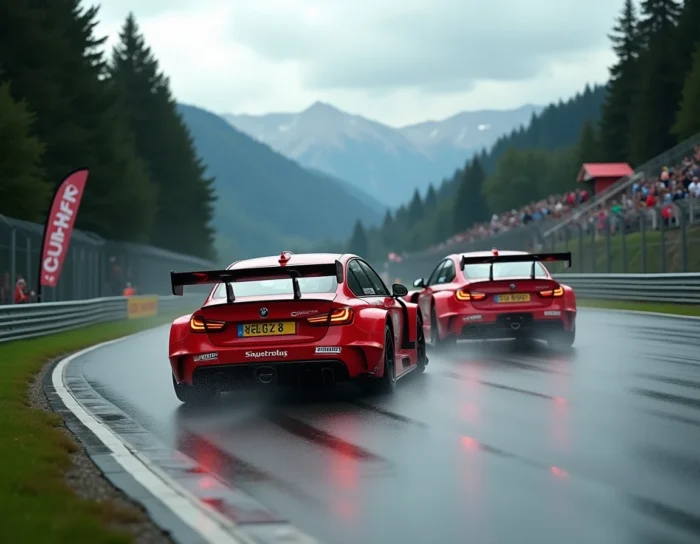
The Bas-Monsieur slalom, near La Chaux-de-Fonds, celebrated its 70th edition on October 4, 2026. The course measures 930 meters and remains accessible to registered cars, making it an entry point for amateur drivers.
The notable fact is the electrification. An electric car won the event in 2024 and 2025. This result is not trivial: on a short track, the instant torque of an electric motor provides a clear advantage in the acceleration phases between the cones.
Why does this detail matter for the Swiss championship as a whole? Because slaloms are the dominant format of national competition. If electric vehicles consistently perform well, it alters the technical hierarchy and forces thermal competitors to rethink their approach.
Formula 1 season 2026: shorter Grands Prix and a new technical framework
The FIA has announced several changes for the 2026 Formula 1 season. The most visible change concerns the duration of the races. The three-hour limit in case of interruption has been removed, while the maximum effective race duration remains set at two hours.
The fuel flow will be reduced, which forces teams to rethink energy management during the race. Specifically, the single-seaters will have less raw power from the thermal engine, compensated by a larger electric component in the powertrain.
What this changes for teams and drivers
The reduction in fuel flow affects not only top speed but also race strategy, overtaking phases, and how drivers manage their tires. Less thermal power means different braking patterns and adapted trajectories.
Teams that already master energy recovery (regenerative braking, battery deployment) will start with an advantage. For others, the 2026 pre-season will be crucial.
Heat management during races: an overlooked regulatory issue
Beyond pure mechanics, the FIA now regulates climatic conditions during Grands Prix. A “heat hazard” procedure is triggered when the ambient temperature exceeds 31 °C. This measure aims to protect drivers, whose cockpits can reach temperatures well above the outside air.
Cooling vests remain optional. Drivers who choose not to wear them face additional constraints on their vehicle. This point has been the subject of public discussions, particularly from some drivers who believe that cooling devices should be standardized.
Why heat affects results
A dehydrated or overheated driver loses concentration and reaction time. In a Grand Prix that can sometimes be decided by a few tenths of a second, thermal management of the body becomes a performance parameter, on par with suspension settings or tire strategy.
- The temperature in the cockpit can significantly exceed the outside temperature, especially on urban circuits where the asphalt retains heat
- The weight of onboard cooling systems can influence the mass distribution of the single-seater
- Teams must balance driver comfort and aerodynamic performance, as adding ventilation alters internal airflow
World Rally: the FIA prepares to distinguish between Rally1 and Rally2 for 2027
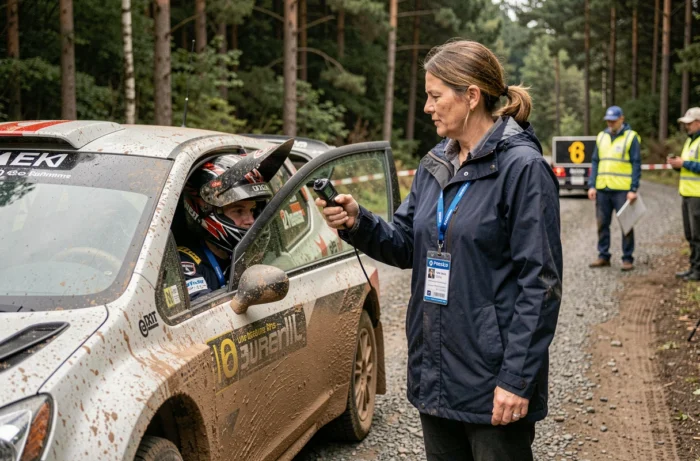
The World Rally Championship (WRC) is also evolving. The FIA is working to better differentiate the Rally1 and Rally2 categories starting in 2027. The goal is to clarify the hierarchy between top-tier cars and those in the immediately lower category.
This clearer separation aims to make the standings more readable for spectators and broadcasters. When two technical categories are too similar in performance, the competition loses clarity. Organizers are seeking to avoid this issue before it becomes entrenched.
For teams competing in Rally2, this distinction could also mean a more stable regulatory framework, with better-controlled costs. Rallying remains a discipline where budgets vary greatly between top teams and private structures.
- Rally1 retains the most advanced hybrid powertrains in the championship
- Rally2 offers a competitive entry point for mid-budget teams
- The FIA seeks to maintain the attractiveness of both categories without cannibalization
Motorsport, both in Switzerland and internationally, is undergoing a phase of technical and regulatory transition. Electrification is progressing in local Swiss competitions, while Formula 1 and the WRC adapt their formats to energy and climate constraints. The upcoming seasons will reveal whether these changes enhance the spectacle or permanently reshuffle the cards among the teams.