
Since July 15, 2026, the entry framework to Gibraltar has radically changed. The EU-UK treaty removes systematic passport checks at the land border with Spain. The documents to be presented now depend on the mode of access to the territory, a distinction that most travel guides have not yet integrated.
Land Border La Línea: What Changes with the Removal of Checks
The border barrier between La Línea de la Concepción and Gibraltar no longer functions as a classic checkpoint. Pedestrians and vehicles cross without queues or routine checks. In practical terms, you will no longer be stopped to present an identity document when crossing the border on foot or by car.
This removal does not mean you can travel without documents. Spot checks remain possible, and you are moving between two distinct jurisdictions. We recommend keeping a valid passport or national identity card on you. The difference from the old system is operational: no more systematic queues, no more stamps, no more document checks at each crossing.
To know precisely which document to provide to go to Gibraltar, you need to distinguish your nationality and your point of entry, as the rules vary depending on whether you arrive by land, air, or sea.
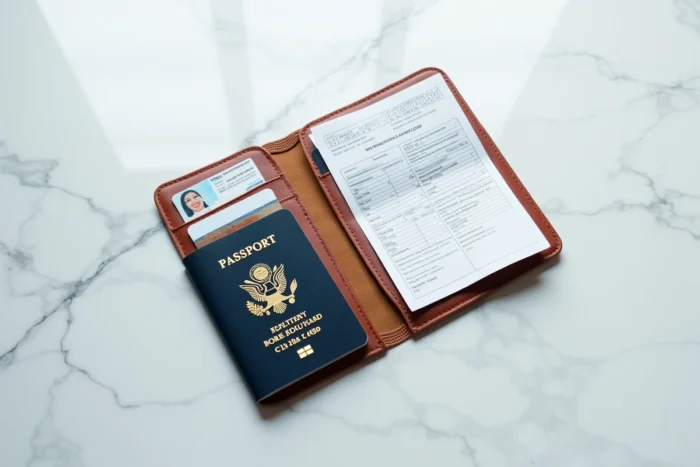
Airport and Port Checks in Gibraltar: Passport or Identity Card
Document checks are now concentrated at the airport and the port. This is the major structural change of the 2026 treaty. If you arrive by plane or boat, you will undergo a check conducted jointly by Gibraltar and Spanish authorities.
European Union Nationals
A valid passport or national identity card is sufficient. The territory applies entry rules aligned with the Schengen area for short stays, even though Gibraltar is not legally a Schengen member state.
This nuance has a direct consequence: your French or Belgian identity card is accepted at Gibraltar airport just as it would be in Malaga or Lisbon. No visa, no additional formalities.
Third Country Nationals
Travelers from outside the EU must check visa requirements based on their nationality. The Gibraltar government has issued a technical notice reminding that visa arrangements are now aligned with Schengen rules. Nationalities exempt from Schengen visas for short stays are generally exempt in Gibraltar as well.
Note: a valid Schengen visa does not automatically grant entry to the territory. Gibraltar maintains its own admission policy. We observe that this confusion remains common among travelers transiting from Spain.
Documents to Keep on You Depending on Access Mode
The table below summarizes the situation since July 2026:
| Access Mode | Systematic Check | Recommended Document |
|---|---|---|
| Land Border (La Línea) | No, only spot checks | Valid passport or national identity card |
| Gibraltar Airport | Yes, joint check | Passport or national identity card (EU), passport + visa if required (third countries) |
| Gibraltar Port | Yes, joint check | Passport or national identity card (EU), passport + visa if required (third countries) |
The logic is simple: by land, checks have disappeared routinely; by air or sea, they have been strengthened.

Proof of Stay and Authorized Duration in Gibraltar
Gibraltar applies short stay rules aligned with Schengen. For EU nationals, no specific duration limitation is added to that of the Schengen area. Third country nationals must adhere to the duration stated on their entry authorization.
In case of a spot check at the land border or during an extended stay, authorities may request:
- A valid identity document (passport or national identity card for Europeans)
- Proof of accommodation or booking to justify the duration of stay
- Proof of sufficient financial means to cover the stay
- A return or onward travel ticket for third country nationals
These checks are rare at the land border but systematic at the port and airport for travelers from outside the EU.
Common Pitfalls Related to Gibraltar’s Hybrid Status
Gibraltar is neither part of the Schengen area nor the European customs union. This hybrid status generates recurring errors.
First confusion: assuming that a stay in Gibraltar “counts” towards the calculation of the 90 Schengen days. The rules are aligned, not merged. A non-European traveler who has exhausted their 90 days in the Schengen area cannot use Gibraltar as an automatic extension.
The territory remains a British jurisdiction with its own admission criteria. Gibraltar authorities reserve the right to refuse entry even to a traveler holding a valid Schengen visa if local conditions are not met.
Second pitfall: currency. Payments are made in pounds sterling and euros in Gibraltar, but travel insurance covering the Schengen area does not necessarily cover Gibraltar. Check for the explicit mention of the territory in your insurance contract before departure.
Crossing the land border from Spain gives a false impression of territorial continuity. In reality, you change jurisdiction, currency, and regulatory framework within a few meters. Keeping your identity documents accessible remains the most basic precaution, even without systematic checks.