
Gasoline vapors in confined spaces reach their lower explosive limit at a very low concentration in ambient air. Any noticeable smell of gasoline in a home indicates a concentration of volatile organic compounds sufficient to pose a toxic risk, and potentially an explosion risk. Benzene, toluene, and xylenes present in fuels are classified as carcinogenic or toxic for reproduction, which requires an immediate and methodical response.
Order of July 27, 2026: Fuel Storage in Boxes and New Obligations
The entry into force on August 3, 2026, of the order amending the order of January 31, 1986, regarding fire protection in residential buildings changes the game for co-owners. The text explicitly prohibits the storage of flammable liquids (fuels, solvents, paints, oils) in parking boxes of residential buildings when they serve as domestic storage spaces.
This point deserves attention: a poorly closed jerrycan in a box adjacent to a dwelling remains the most frequent cause of gasoline smell rising into living spaces. The order goes further by imposing a written declaration model. The occupant of the box must declare that they do not store any flammable liquid and that the maximum allowable calorific load is respected.
To assess the danger related to the smell of gasoline in the house, we recommend prioritizing the compliance of adjoining boxes with these new provisions. In a co-ownership, the property manager is required to distribute the declaration model and to monitor its return.
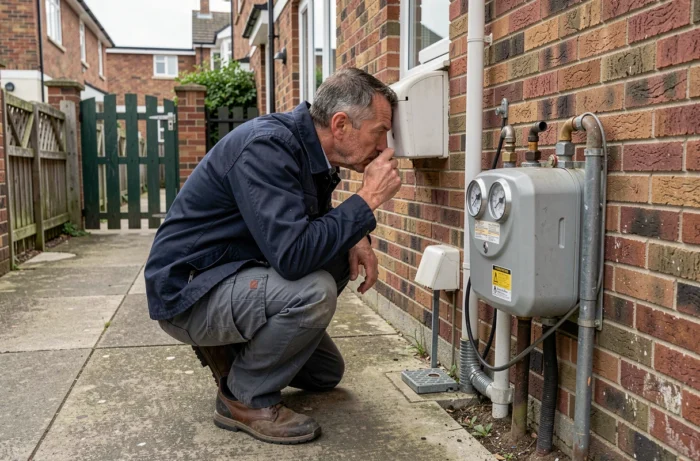
Identify the Exact Source of Gasoline Vapors in a House
A fuel smell does not always mean that fuel is present on-site. Several mechanisms of vapor migration produce the same olfactory result.
Attached Garage and Vapor Transfer by Depression
An attached garage connected to the living space is a critical point. Motorized devices (lawnmower, chainsaw, generator) release vapors even with the tank closed, simply through permeation through the plastic walls of the tank. The mechanical ventilation of the dwelling creates a depression that draws these vapors from the garage into the living spaces, especially if the door seal is degraded.
We observe that installing a watertight threshold and a door closer on the garage-living space connection significantly reduces this transfer.
Fuel Oil Tank and Olfactory Confusion
Domestic fuel shares part of its aromatic profile with gasoline. An underground tank that has a vent defect or a micro-leak at the filling connection produces a smell easily confused with that of automotive fuel. The distinction is important: fuel oil has a flash point much higher than that of gasoline, which alters the assessment of explosion risk.
Infiltration from the Sewage Network
Illegal discharges of fuel into the sewage system rise through dried traps (unused shower, floor drain). This mechanism explains intermittent odors, often stronger in dry weather or when the mechanical ventilation system is running at full speed.
Reaction Protocol in Case of Persistent Gasoline Smell
The sequence of actions must follow a strict order to avoid worsening the situation.
- Do not operate any electrical switch or doorbell: any switching generates an arc capable of igniting an air-gasoline mixture within the explosive range. This also includes turning on a mobile phone in a saturated area.
- Manually open the windows (no electric shutters) to create a cross-draft. Natural ventilation remains the safest way to dilute vapors below the critical threshold.
- Evacuate the dwelling without locking the electronic door. Reach the outside before making any phone calls.
- Contact the firefighters (18 or 112) from outside. A crew equipped with an explosimeter will confirm or deny the presence of flammable vapors and measure their concentration.
If the smell comes from a neighboring box in a co-ownership, reporting to the property manager should be accompanied by a call for help. Since the July 2026 order, gasoline jerrycans and solvents are considered sensitive points to be reported for emergency services.

Eliminate Residual Vapors and Prevent Recurrence
After eliminating the source, the smell may persist for several days. Volatile organic compounds adsorb onto textiles, drywall, and porous materials.
Prolonged forced ventilation (at least 48 hours with windows open) remains the most effective method. White vinegar in bowls absorbs some of the residual volatile compounds, but does not replace air renewal.
For serious cases (fuel spillage on a slab, impregnation of a porous floor), cleaning with soapy water is not sufficient. A mineral absorbent like diatomaceous earth, applied for several hours before vacuuming, captures hydrocarbons trapped in the porosity of the concrete.
For prevention, three measures sustainably reduce the risk:
- Replace plastic jerrycans with approved metal cans with safety closures, and store them outside the living space, in a ventilated area.
- Annually check the seal of the garage-living space door and the condition of the threshold seal.
- Ensure the proper functioning of the traps (pour a glass of water into each unused trap at least once a month to maintain the water seal).
The regulatory framework of 2026 strengthens the individual responsibility of the storer. The written declaration imposed by the order engages the civil liability of the occupant in the event of a disaster related to undeclared storage of flammable liquids. A recurring smell of gasoline in a collective building now justifies a formal request for compliance addressed to the property manager, a useful document in case of recourse.