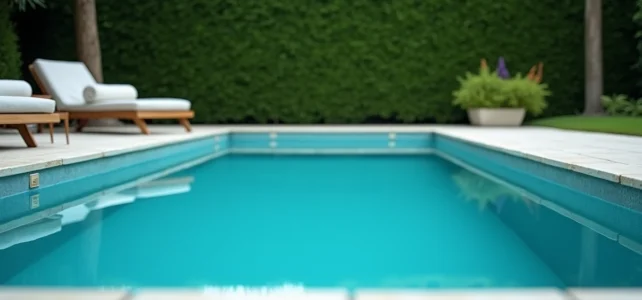
You have chosen your polyester shell model, validated the shape of the pool, and set the coping stones. One decision remains that may seem trivial but will radically change the appearance of your garden for decades: the color of the shell. The gel coat applied in the factory determines the water’s hue, the ambiance around the pool, and even the ease of daily maintenance.
Gel coat and water color: the mechanism that few guides detail
The visible color of the water does not depend solely on the pigment of the gel coat. It results from a combination of the coating’s hue, the pool’s depth, sunlight exposure, and the reflection of the sky. A white shell under a cloudy sky produces gray-green water, while the same shell under bright sunshine gives a vibrant turquoise.
Have you ever noticed that a pool photographed in the morning looks different from one taken in the late afternoon? This is exactly the phenomenon. Light alters the perception of color much more than the gel coat alone. A pool facing directly south with little shade intensifies warm tones. A pool nestled between walls or tall hedges softens saturation.
Before confirming a color on a sample of a few centimeters, ask your pool installer for photos of completed projects taken at different times. The ideal situation is to visit an existing pool in a sunlight configuration similar to yours, as this is the only reliable way to anticipate the actual water rendering.
To delve deeper into this topic, the approach of choosing the pool shell color while considering exposure and architectural style helps avoid unpleasant surprises after installation.
Dark pool shell colors: the thermal effect and its trade-offs
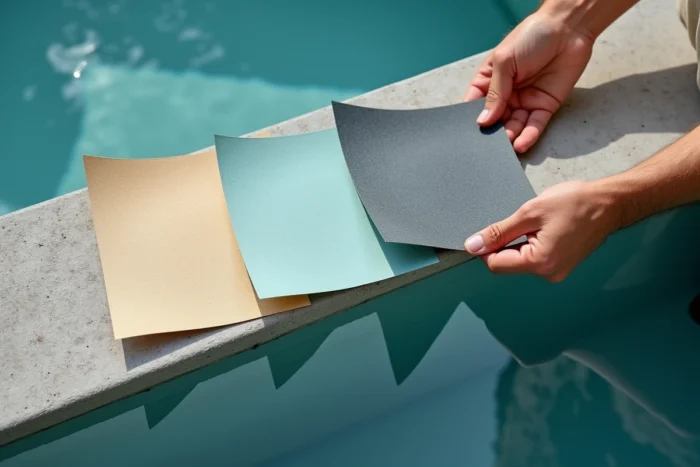
Anthracite gray or slate black shells are appealing for their “natural lake” look. The water takes on a dark, deep, almost mysterious appearance. On the temperature side, dark hues can warm the water by a few degrees compared to a white shell, a valuable advantage at the beginning and end of the season.
The trade-off is less often mentioned. Limescale and waterline deposits are more visible on a dark shell. In an area where the water is hard, cleaning the waterline becomes more frequent. Leaves, pollen, and dust also contrast more strongly with the dark bottom.
A light gray shell offers a compromise: it retains some of the mineral effect without amplifying the visibility of deposits as much. This is, in fact, one of the reasons why light gray dominates recent sales.
Pool trend 2025-2026: mineral tones replace classic blue
Azure blue remains a classic, but the trend is clearly reversing. Sand, natural stone, slate gray, and even olive green shades are gaining ground in new projects as well as renovations. Several manufacturers and pool installers note that traditional blue is increasingly perceived as dated.
- Sand and beige produce emerald green water reminiscent of Mediterranean coves, ideal with a stone house or wood cladding.
- Light gray gives a sophisticated blue-gray water that pairs well with contemporary architecture, polished concrete, or composite terraces.
- Olive or khaki green creates a very natural “mountain lake” effect, suitable for landscaped gardens with plenty of vegetation.
- White remains the choice that maximizes brightness and the turquoise aspect of the water, but it requires regular maintenance to stay vibrant.
This shift towards mineral tones reflects a broader trend in outdoor landscaping: homeowners are looking to blend the pool into the landscape rather than contrast it.
Matching the shell color to its environment: a practical method
Rather than choosing a “favorite” color from a catalog, start from your existing environment. Three elements determine the final harmony.
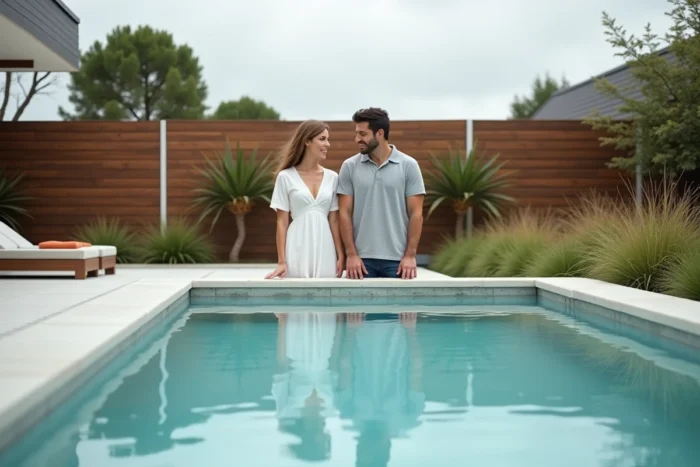
The first is the dominant color of the facades and walls visible from the pool. A house with light walls (white, cream, stone) can support almost any shell hue. A dark facade or natural wood pairs better with a sand or light gray shell than with a bright blue.
The second element is the material of the decks and coping stones. Beige reconstituted stone coping suggests a sand or white shell. Gray porcelain tiles call for a light gray or anthracite.
The third is the surrounding vegetation. A very green garden with dense hedges and deciduous trees produces green reflections in the water. A white shell in this context will give a greenish water, which often disappoints. A gray or sand shell absorbs these reflections better and maintains a consistent rendering.
Common mistakes when choosing pool shell color
The first mistake is to validate a color on a small dry sample indoors. The gel coat changes radically in appearance once submerged and illuminated by the sun. Always request wet samples or, better yet, photos in real situations.
- Choosing a very dark blue in a limestone area without anticipating the increased maintenance of the waterline.
- Opting for pure white in a heavily wooded garden, which often produces a disappointing green reflection.
- Ignoring the color of the submerged roller cover: a white cover in an anthracite shell creates a visible contrast underwater when the cover is open.
The cover, coping stones, and shell form a visual trio that should be considered together. Manufacturers often offer coordinated color charts for these three elements.
Ultimately, the choice of a polyester shell color is made on-site, not on a screen. Visit installed pools, observe them at different times, and always start from your real environment rather than a catalog photo. This is the only reliable method to achieve a rendering that you will still appreciate in ten years.