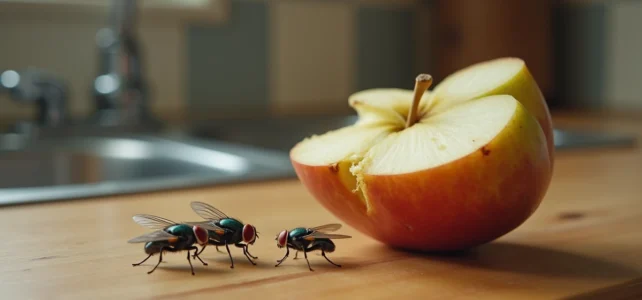
Tens of flies appear within a few days on the windows, the kitchen ceiling, around the trash can. This sudden proliferation is never random: it signals an active breeding site, often hidden in a corner of the home. Understanding what attracts and feeds these insects allows for targeting the source rather than treating the symptoms superficially.
Poorly ventilated homes and heat: the underestimated structural factor
Common content on fly invasions lists open trash cans and forgotten fruits. They overlook a significant parameter: the thermal configuration of the home. Flies exploit every phase of sustained heat to lay eggs, and a warm, humid interior accelerates every stage of their reproduction cycle.
A poorly ventilated apartment under the eaves, facing south, accumulates heat and humidity. These conditions create micro-niches where larvae develop much faster than in a temperate environment. The lengthening of periods of high heat, documented in recent years, multiplies the number of fly generations per season.
In contrast, a properly ventilated home, with regular air circulation and food storage areas kept cool, significantly reduces the risk of infestation. Ventilation does not eliminate flies, but it removes the conditions that turn a one-time problem into a lasting invasion. To understand where flies come from in the house, one often needs to look beyond hygiene and examine the building itself.

Identifying the breeding site: house flies, blowflies, and fruit flies
Not all flies indicate the same problem. Confusing them wastes time on the wrong leads.
House flies and organic waste
The house fly (Musca domestica), gray and measuring a few millimeters, is the one most commonly encountered. It lays eggs in close proximity to decaying organic matter: trash cans, food scraps, pet litter. Each female can lay several hundred eggs during her short life, which explains the speed of an infestation.
Blue or green flies and hidden sources
The sudden appearance of large metallic-looking flies (blue or green, noisy) points to a source of decomposing protein. A dead animal in a chimney flue, behind a wall, under a floor: this is the most frequent cause of brutal invasions. If you have no apparent food source and these flies appear by the dozens, a hidden rodent carcass is the primary hypothesis.
Fruit flies and fermented fruits
The small brown flies buzzing around the fruit bowl are fruit flies. They reproduce on sweet, fermenting materials: ripe fruits, bottle bottoms, dirty siphons. Their presence in large numbers often indicates a kitchen or bathroom siphon where organic matter is stagnant.
Real health risks of a fly invasion
The noise and visual nuisance mask a more serious problem. House flies carry pathogenic bacteria: staphylococcus, streptococcus, salmonella. They can also transmit agents responsible for typhoid fever, dysentery, or parasitic worms.
The mechanism is simple. The fly lands on contaminated material (waste, feces, decomposing food), then lands on your food or preparation surfaces. Each contact deposits pathogens on food surfaces. Food left uncovered in an infested kitchen is the main vector for transmission.
A rarely highlighted point: crushing a fly on a countertop or near food disperses the bacteria it carries onto the surface. It is better to capture or remove it than to crush it in a preparation area.
- The most vulnerable populations to these contaminations are young children, the elderly, and immunocompromised individuals, for whom food poisoning can have serious consequences.
- Pets are also affected: their bowls left out in the open attract flies and become points of cross-contamination.
- The risk increases proportionally to the duration of the infestation: the longer the breeding site persists, the higher the density of flies and the more contacts with food multiply.
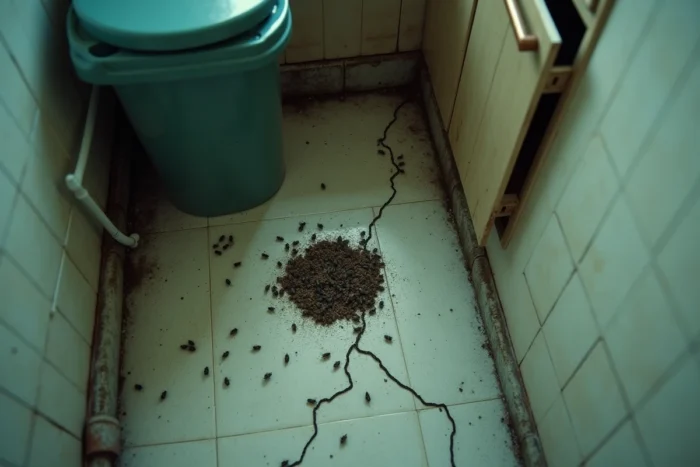
Concrete solutions: eliminate the source before trapping
Traps, essential oils, and natural repellents only work as a complement. If the breeding site remains active, new flies will appear faster than you can eliminate them.
Locate and eliminate the breeding site
The first action is to search for the source. Inspect the following areas:
- Indoor and outdoor trash cans: check the seal of the lid and the frequency of emptying. In hot weather, a trash bag containing food waste becomes a breeding site in less than 24 hours.
- Siphons and pipes: pour boiling water into little-used siphons (secondary bathroom, laundry room). Organic matter accumulated in a dry siphon feeds colonies of fruit flies.
- Inaccessible areas: attics, false ceilings, ventilation ducts. An unusual odor combined with the presence of blowflies justifies a thorough inspection, even the intervention of a professional.
- Pet litter and bowls: clean daily, especially in hot weather.
Traps and repellents: what works, what is not enough
Cider vinegar traps effectively capture fruit flies. A container covered with film pierced with small holes, filled with a mixture of vinegar and a drop of dish soap, attracts and drowns these small flies. For house flies, sticky strips remain a useful indicator of infestation density.
Chemical insecticide sprays pose risks to indoor air quality, especially in kitchens and bedrooms. Several sources recommend prioritizing mechanical solutions (screens on windows, traps) and eliminating sources rather than repeated chemical treatments.
Essential oils (lemongrass, lavender, peppermint) act as temporary repellents. They keep flies away from a specific area for a few hours, but no repellent replaces the elimination of the breeding site.
A persistent invasion after cleaning all visible sources likely indicates a hidden breeding site (dead animal in a wall, faulty pipe). In this case, a professional diagnosis can locate what a domestic inspection cannot reach.