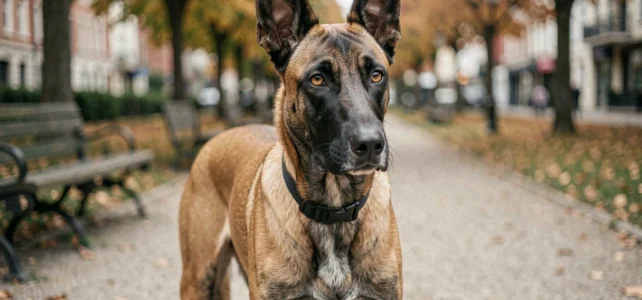
The Dutch shepherd and the Malinois share a similar silhouette, a comparable size, and a reputation as high-performing working dogs. Confusing the two is common, even among experienced owners. However, their differences in temperament, health, and daily needs guide the choice towards distinct lifestyle profiles. This article compares the two breeds based on the criteria that matter at the time of adoption.
Dutch Shepherd and Belgian Malinois: Comparative Table of Characteristics
| Criterion | Dutch Shepherd | Belgian Malinois |
|---|---|---|
| Origin | Netherlands | Belgium (Mechelen region) |
| Coat | Short, long, or rough depending on the variety, often brindle | Short coat, fawn with black masking |
| Residual herding instinct | Very pronounced | Less pronounced, more focused on detection/defense work |
| Popularity in France | Low (few specialized breeders) | Very high (law enforcement, dog sports) |
| Diversity of lines | Little distinction between working/show | Well-separated working lines and show lines |
| Known sensitivities | Dysplasia (hips, elbows), documented genetic monitoring | Dysplasia, eye problems, sensitivity to general anesthesia |
| Required activity level | High | Very high |
The Dutch shepherd retains more pronounced herding instincts than the Malinois. The latter has been more selectively bred for bite work, detection, and competitive obedience. This divergence in selection explains much of the behavioral differences in daily life.
A comparison of Dutch shepherd vs. Malinois on Amazing Pet Place details these lineage differences with concrete benchmarks for each breed.
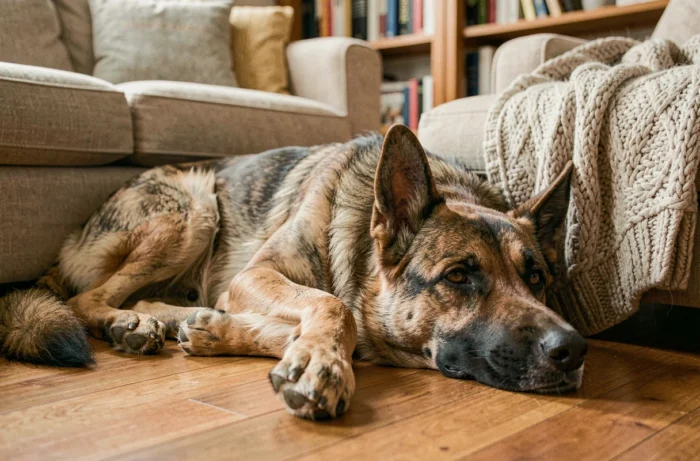
Health and Genetic Screening: A Transparency Gap Between the Two Breeds
Health-wise, both dogs share a predisposition to hip and elbow dysplasia. However, the screening protocols differ significantly between the breeds and countries.
For the Dutch shepherd, serious breeders publish precise results. Specialized sources mention screenings including HDA/A, ED0/0, OCD 0, DM clear, SDCA1&2 clear, and mdr1 clear. This transparency allows buyers to verify the genetic status of the breeders line by line.
The Malinois presents a slightly broader spectrum of risks. In addition to dysplasia and eye disorders, a sensitivity to general anesthesia is documented by several recent veterinary sources. This point is rarely mentioned in general comparisons, even though it directly concerns any owner whose dog may undergo surgery.
- Before purchasing a Dutch shepherd, request DM, SDCA1, SDCA2, and mdr1 certificates: a reliable breeder will provide them without hesitation.
- For a Malinois, check the dysplasia score of both parents and ask the breeder about the eye history of the lineage.
- Regardless of your choice, inform your veterinarian of the exact breed before any sedation, especially for the Malinois.
Active Lifestyle or Family with Children: Two Profiles, Two Answers
The Malinois requires intense daily stimulation. Without sustained physical and mental activity (tracking, obedience, dog sports), it redirects its energy towards destructive or anxious behaviors. This is not a dog that adapts to a sedentary life, even with a large garden.
The Dutch shepherd shares this need for movement, but its temperament differs in one often underestimated aspect: its sensitivity to the family environment is generally stronger. Its herding instinct drives it to monitor, gather, and anticipate the movements of household members. For a family with children, this trait can be an asset, provided that this vigilance is channeled through appropriate training.
Malinois and Sporty Owner: A Demanding Duo
The Malinois excels in high-level ring, detection, and agility disciplines. Its reactivity is an advantage for an experienced owner who practices regularly. For a first-time owner or a household with an unpredictable lifestyle, the risk of under-stimulation is the primary factor for failure with this breed.
Dutch Shepherd and Daily Versatility
The Dutch shepherd adapts to a wider range of activities without reaching the same level of intensity as the Malinois in competition. It performs well in agility, obedience, and herding activities. Its training requires consistency, but its tolerance for variations in daily rhythm remains higher than that of the Malinois.
Availability and Breeder Choice in France
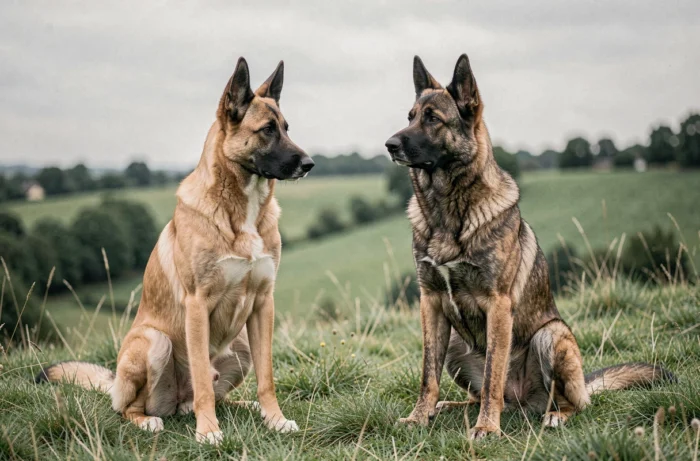
Finding a Dutch shepherd breeder in France requires more research than for a Malinois. The breed remains confidential, with a limited number of litters annually in the territory. This rarity has a direct consequence: waiting times can reach several months, and selection is often done by list.
The Malinois, on the other hand, benefits from a dense network of breeders. This abundance does not guarantee quality. The distinction between working line and show line remains a determining criterion: a Malinois from a police working line will not react the same way as a show line subject to everyday stimuli.
- For a Dutch shepherd, prioritize breeders who publish all genetic and orthopedic results of their breeders.
- For a Malinois, clearly identify the lineage (working or show) and ensure it matches your level of experience.
- In both cases, avoid online ads without proof of health tests: the recent trend in breeding emphasizes the verifiable transparency of sellers.
The choice between these two breeds relies less on aesthetic preference than on an honest inventory of your schedule, canine experience, and tolerance for intensity. The Dutch shepherd offers a slightly more flexible balance for an active household without being a specialist.
The Malinois requires a near-daily sporting and educational commitment to express its potential without generating behavioral issues. Health data and the quality of genetic monitoring from the breeder remain, for both breeds, the most reliable criterion at the time of decision.