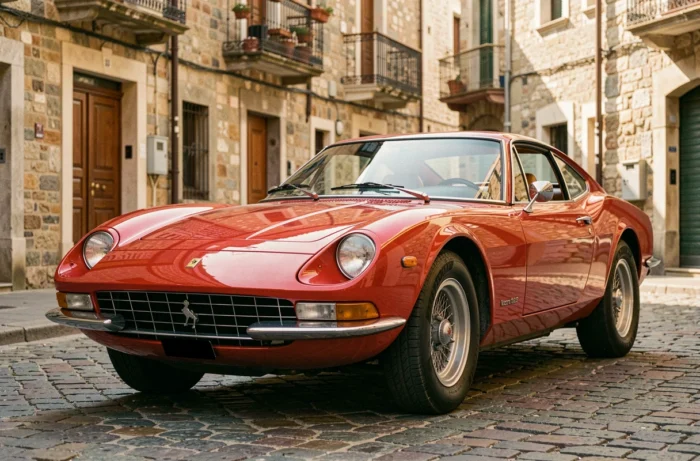
An iconic car is not defined by its age. It is recognized by its ability to permanently change the design, manufacturing, or use of the automobiles that followed it. Some models have set a technical or aesthetic standard to the point of rendering everything that preceded them obsolete. It is these concrete breaks, and not mere nostalgia, that allow us to distinguish a remarkable car from an ordinary commercial success.
Several of these models continue to fuel a rapidly expanding collector market. Interencheres recorded an increase in the sales of collectible vehicles in 2025 compared to 2024, a sign that the heritage value of these automobiles far exceeds the circle of mechanical enthusiasts. A panorama of these models and their legacy can be found on the car page of Motorcycle Boy, which compiles useful references for enthusiasts.
Collection registration and ZFE: the regulatory framework for historic cars
Owning an iconic car in France involves navigating a precise administrative framework. A vehicle over thirty years old, not produced and kept in its original configuration, can qualify for a collection registration. This status significantly alters the owner’s experience.
The technical inspection then occurs every five years, compared to two for a standard vehicle. Cars built before 1960 even benefit from a total exemption from this inspection.
The issue of circulation in low emission zones (ZFE) is more complex. Collection registration facilitates access to these zones for many historic vehicles, but local authorities retain decision-making power for exemptions. An owner driving between Paris and Lille may find themselves subject to different rules depending on the metropolitan area. This disparity necessitates checking access conditions city by city before each trip.
Engine, chassis, aerodynamics: the technical breakthroughs that created icons
Legendary cars share a common point: they solved an engineering problem in a way that no one had attempted on this scale. Three technical areas concentrate the bulk of these innovations.
Engine architecture and democratization of performance
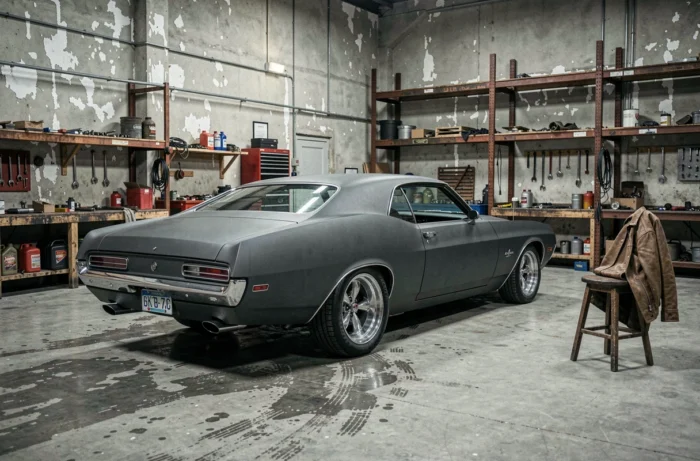
The Ford Mustang, launched in the 1960s, popularized the idea that a sports sedan could be accessible to the masses. Its V8 engine paired with a reasonable price created the “pony car” category and forced all American manufacturers to offer equivalent models.
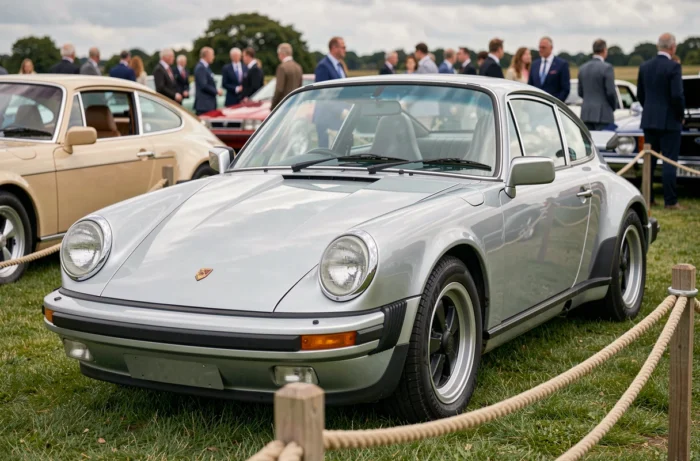
The Porsche 911, with its rear-mounted flat engine, went against conventions. This technical choice, criticized at the time for its demanding road behavior, has become the signature of a brand still in production after six decades. No other model has maintained such an atypical architecture for so long.
Monocoque chassis and structural lightness
The Citroën 2CV illustrates another form of breakthrough. Designed to motorize rural France in the post-war era, it relied on an extremely simple platform chassis and long-travel suspensions, intended for dirt roads. Its commercial longevity, far beyond what its designers anticipated, proves that a technically sound response to a real need creates a durable vehicle.
The Mercedes-Benz 300 SL, on the other hand, introduced gullwing doors and direct fuel injection on a production automobile. This combination of aerodynamic and mechanical solutions set the standard for luxury grand touring for the following decade.
Insurance and valuation: what distinguishes a collector car from an old vehicle
Not every old car is a collector car. The distinction rests on specific criteria that directly influence the insurance and value of the vehicle.
- Mechanical and aesthetic authenticity: a modified model (engine change, non-compliant bodywork) loses its eligibility for collection status and sees its value decrease in the auction market.
- Documented rarity: the number of units produced and the number of surviving examples determine the tension between supply and demand. The Ferrari 250 GTO, produced in just a few dozen units, reaches valuations unrelated to its raw performance.
- Traceable history: a complete maintenance log, restoration invoices, and a clear ownership history add a significant premium to the transaction.
The insurance for a collector car works differently from standard auto insurance. Specialized contracts take into account the agreed value of the vehicle (determined by appraisal, not by Argus) and often limit the annual mileage allowed. An owner who uses their car daily will likely need to take out standard coverage, which is less advantageous.
Longevity of modern cars: a threatened automotive heritage
Recent models may never achieve emblematic status. Industry professionals warn about the gradual disappearance of certain skills related to traditional mechanics. The proliferation of onboard electronics complicates the long-term restoration of vehicles produced since the 2000s.
The availability of parts poses a structural problem. A classic cylinder engine can be reconditioned by an independent workshop with custom-made parts. A proprietary electronic control unit, once production stops by the manufacturer, becomes irreplaceable.
This fragility contrasts with the robustness of older automobiles. A Renault 4L or a Volkswagen Beetle remains repairable almost anywhere in the world due to the simplicity of their design. Current electric cars, despite their qualities, raise questions about battery lifespan and replacement in twenty or thirty years.
The automotive heritage of tomorrow is being shaped now. The models that will endure through the decades will likely be those whose architecture remains accessible for independent maintenance, not necessarily the most sophisticated at their factory release.