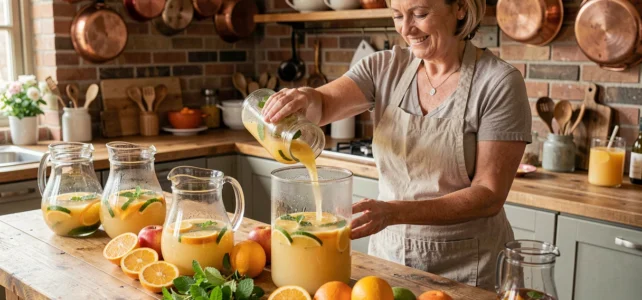
Three ingredients, one bowl, and about thirty guests waiting for their drink. The Jacqueline, this popular cocktail made with white wine, lemonade, and grenadine, seems simple to prepare. The catch is scaling up: unbalanced measurements, disappearing bubbles, or a mix that’s too sweet or too sour. Successfully making a Jacqueline for a party requires some adjustments that the classic recipe doesn’t mention.
Why the Jacqueline Loses Its Bubbles in Large Quantities
Have you ever noticed that a cocktail served in a pitcher fizzes less than a glass prepared on the spot? The problem lies with the CO2 in the lemonade. The larger the volume of liquid, the greater the surface area in contact with the air. The gas escapes much faster.
For a Jacqueline meant for several liters, the solution is simple: keep the base and the lemonade separate until serving. Prepare the white wine-grenadine mixture in advance in a large container in the refrigerator. Keep the lemonade in its bottles, sealed, and chilled. When the guests arrive, pour the lemonade into the base and gently mix.
This method also avoids another pitfall. By combining everything several hours in advance, the grenadine tends to settle at the bottom, and the sugar concentrates in the last glasses served. By adding the lemonade at the last moment, its effervescence naturally stirs the mixture.
If you’re looking for a detailed recipe for Jacqueline in large quantities with tested proportions, the base remains the same: a ratio that favors white wine, complemented by lemonade and a splash of grenadine.
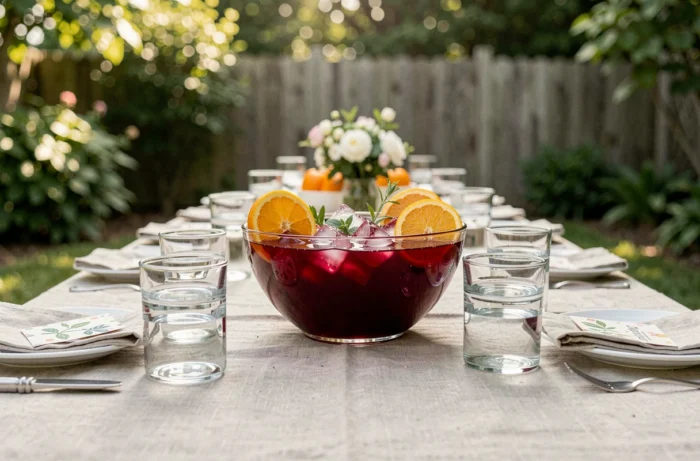
White Wine and Grenadine Dosage: The Ratio That Changes Everything
Most online recipes provide proportions for one or two glasses. Multiplying these quantities by ten doesn’t work as well as one might think. The sweet taste amplifies on a larger scale because the perception of sweetness varies with the volume consumed.
Dry White Wine Instead of Semi-Dry
Choosing a dry white wine as the base makes all the difference. A semi-dry wine adds sugar where the grenadine and lemonade already contribute. With a dry wine, the cocktail maintains a freshness that invites you to refill without feeling overwhelmed.
The grenadine should remain an accent, not a dominant flavor. For a large volume, slightly reduce the proportion of grenadine compared to the individual recipe. A quality grenadine syrup (made from fruit and not coloring agents) provides enough color and flavor in moderate amounts.
Water as a Hidden Ingredient
A point rarely addressed in festive cocktail recipes is intentional dilution. When preparing a batch in advance, adding a small measured amount of fresh water to the wine-grenadine base helps compensate for the lack of melting ice at serving time. The result: each glass has the same intensity from the first to the last.
Without this dilution, the first glasses served will be more concentrated than the following ones, where the ice will have had time to melt in the bowl.
Serving and Storing for a Successful Evening
The Jacqueline is not a punch that can be forgotten on a table for hours. Its freshness depends on two factors: temperature and carbonation.
- Keep everything cold until the last moment: white wine, lemonade, and even the serving bowl (place it in the refrigerator an hour beforehand if possible).
- Add the lemonade in several increments rather than all at once. Pour a third of the volume at the start, then top up as the level goes down. The bubbles will stay lively longer.
- If you use fresh fruit for decoration (lemon slices, raspberries), add them at serving time. Fruit that has been soaked in alcohol for several hours becomes soft and clouds the mixture.
- A punch containing fresh fruit does not keep well, even in the refrigerator. Count on a few hours at most before the flavors turn.
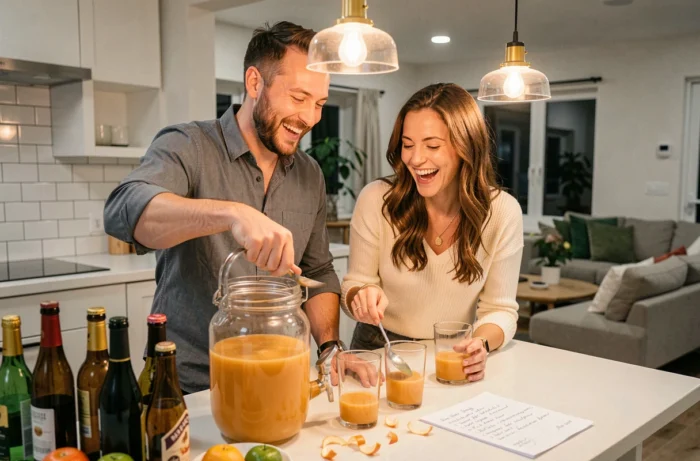
Variations of the Jacqueline to Adapt the Cocktail to Your Evening
The charm of this recipe lies in its simplicity, but nothing prevents it from evolving according to the context.
For a less alcoholic version, increase the proportion of lemonade and decrease that of white wine. The cocktail remains colorful and festive but is better suited for an outdoor afternoon than a late evening.
Replacing the grenadine with raspberry or peach syrup gives a different flavor profile without changing the method. Peach syrup with a dry white wine resembles a Bellini, in a more accessible version.
For winter evenings, some add a touch of blackcurrant liqueur instead of grenadine. The result then resembles a revisited kir, served chilled rather than iced.
Common Mistakes When Preparing a Jacqueline for a Group
Three pitfalls often arise when scaling up:
- Using warm lemonade. Even a few degrees of difference can cause the fizz to dissipate as soon as it’s mixed.
- Stirring vigorously with a ladle or whisk. A gentle mixing preserves the bubbles; a slow circular motion is sufficient.
- Preparing the entire cocktail at the beginning of the evening. Guests rarely arrive all at once. It’s better to assemble two or three successive batches than a single bowl that loses its liveliness after an hour.
The Jacqueline remains a sharing cocktail, designed to be enjoyed fresh and in good spirits. Keeping the lemonade separate, measuring the grenadine sparingly, and serving in increments: these three reflexes make the difference between an ordinary mix and a cocktail that your guests will ask for the recipe.