
Your property manager has just added a “collective energy performance diagnosis” to the agenda of the next general assembly. Behind this acronym lies an obligation that now concerns all co-ownerships, with a specific timeline and concrete consequences on charges, the value of lots, and the planning of works. Understanding what the energy diagnosis in co-ownership entails, and especially the exact role of the property manager in its implementation, helps avoid unpleasant surprises.
National Register of Co-ownerships: A Reporting Obligation Often Ignored
The energy diagnosis is not only used to prepare for works. Since the decree of August 19, 2025, and the order of June 23, 2026, the national register of co-ownerships (RNIC) is enriched with new mandatory data. Among them: the energy class resulting from the collective energy performance diagnosis and information about the building’s technical systems.
Specifically, once the diagnosis is completed, the property manager must report these results in the RNIC. This is not optional. The lack of an update exposes the co-ownership to administrative difficulties, particularly during the resale of a lot or a request for a grant.
Why does this point often go unnoticed? Because most co-owners associate the collective energy performance diagnosis solely with the issue of works. The reporting aspect, however, falls under the direct responsibility of the property manager. A co-owner engaged in renovating their building should verify that their property manager has correctly updated the register after receiving the energy diagnosis habitatfuturvert.fr co-ownership, as this detail conditions access to certain aids.

Timeline for the Collective Energy Performance Diagnosis: What the Property Manager Must Anticipate
The Climate and Resilience Law imposes a progressive timeline for the completion of the collective energy performance diagnosis. Co-ownerships with more than 200 lots were prioritized first. Smaller buildings follow according to a staggered schedule.
The property manager is solely responsible for adding the energy performance diagnosis to the agenda of the general assembly. Without this addition, no vote can take place, and the diagnosis cannot be ordered. Delays do not always stem from a refusal by the co-owners, but rather from a simple oversight in adding it to the agenda.
Differentiating Collective Energy Performance Diagnosis and Energy Audit
The collective energy performance diagnosis is a snapshot of the building’s energy performance. It assigns a class (from A to G) and provides general recommendations. The energy audit goes further: it proposes costed work scenarios, with a priority order.
For a co-ownership considering a comprehensive renovation, the diagnosis alone is not sufficient. The audit is necessary to access certain aids like MaPrimeRénov’ Copropriété. The diagnosis opens the door, the audit paves the way for the works.
PPPT and Sanctions: The Regulatory Lever That Property Managers Underestimate
The multi-year work plan project (PPPT) is a document that schedules the works of the co-ownership over ten years. It is based on the results of the collective energy performance diagnosis or the energy audit.
Did you think that the absence of a PPPT had no consequences? The mayor or prefect can demand its submission within a month. If the property manager does not respond within this timeframe, a multi-year work plan may be imposed at the co-ownership’s expense. This procedure exists and has already been implemented in certain municipalities.
What the Property Manager Must Do Specifically
- Add the collective energy performance diagnosis to the agenda of the general assembly in compliance with the legal timeline, then order the diagnosis from a certified diagnostician after the vote
- Report the energy class and technical data in the national register of co-ownerships (RNIC) as soon as the report is received
- Develop or update the PPPT based on the results of the diagnosis and submit it for a vote by the co-owners
- Keep all documents (diagnosis, audit, PPPT) in the building’s maintenance log, accessible to all co-owners
This sequencing seems simple on paper. In practice, the gap between the vote in the general assembly and the completion of the diagnosis often exceeds several months, due to a lack of available diagnosticians or complete preparatory documents.
Successfully Completing the Energy Diagnosis: Preparation and Pitfalls to Avoid
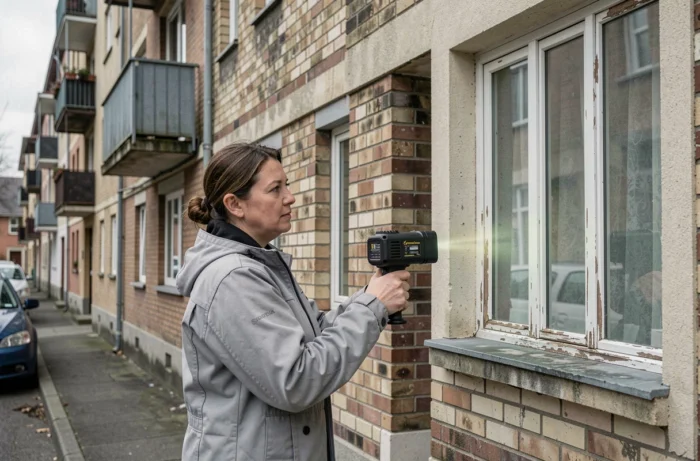
The quality of the diagnosis largely depends on the information provided to the diagnostician before their visit. Building plans, energy bills from the last three years, descriptions of collective heating equipment, the date of the last roof or facade renovation: each missing piece of data forces the professional to make assumptions that degrade the reliability of the result.
The Trap of Default Method
When the diagnostician does not have evidence on insulation (thickness, material, installation date), they apply default values corresponding to the year of construction. For a building from the 1970s that received external insulation in 2015, the difference between the default value and the actual value can shift the energy class by one or two letters.
Gathering invoices for past works directly improves the obtained class. The property manager has every interest in consulting the council to retrieve these documents, which are sometimes scattered among former managers.
Choosing the Right Diagnostician
- Check the current certification on the official directory of Cofrac or accredited organizations
- Ask for references on buildings of comparable size and age, as a diagnostician accustomed to individual houses does not have the same expertise on a collective building of 50 lots
- Require a complete on-site visit (roof, boiler room, common areas, at least one typical apartment) and refuse diagnoses conducted solely based on plans
A rushed collective energy performance diagnosis costs the same as a well-done diagnosis, but its consequences on the PPPT and work decisions can amount to tens of thousands of euros in poor choices.
Energy renovation in co-ownership relies on a precise sequence: diagnosis, declaration to the register, development of the PPPT, voting on the works. Each link depends on the previous one, and the property manager remains the conductor of this sequence. Ensuring that they adhere to the timeline and submit the correct documents at the right time remains the most effective lever available to co-owners.