
Customizing your interior through DIY is not limited to following a macramé tutorial or repainting a piece of furniture white. The market for creative hobbies applied to decor is evolving under the influence of new aesthetic trends, as well as regulatory constraints that most guides overlook. This article explores several concrete avenues for transforming an interior with creative DIY ideas, while also addressing the practical questions these projects raise.
GPSR Regulation and DIY Decor Items: What Changes for Creators
Since December 13, 2024, the European regulation General Product Safety Regulation (EU) 2023/988 applies to all non-food consumer products. Decorative items, furniture, accessories, and interior creations are affected, whether they are new, second-hand, repaired, or refurbished.
This regulation replaces Directive 2001/95/EC. It imposes a general obligation to prove that a product is safe, with risk analysis, technical documentation, and traceability (type, batch, manufacturer). Online marketplaces now have specific obligations to verify safety information before listing products for sale.
For a creator who makes homemade candles, DIY lighting, or decorative items intended for sale or public donation, this means providing safety instructions and warnings, under penalty of product withdrawal. DIY remains free at home, but selling or giving away your decorative creations now requires regulatory traceability.
Field reports vary on the actual impact of this regulation for small artisan creators. Sales platforms are beginning to require these documents, which changes the practices of those who publish their creations on specialized or generalist sites.
Painting and Texture on Walls: The Drenching Technique
Drenching involves applying the same shade of paint to the walls, ceiling, baseboards, and woodwork of a room. This approach, validated by professional decorators, creates a uniform visual envelope that alters the perception of volumes. On Les Bricoles De Louve, this type of creative approach is applied to accessible projects.
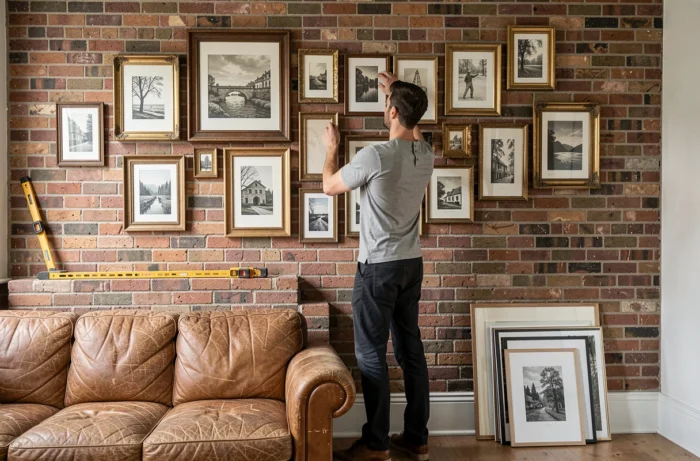
The technique works particularly well in small spaces, where it eliminates visual breaks between surfaces. It does not require advanced technical skills, but a thoughtful color choice: a shade that is too dark in a poorly naturally lit room can produce the opposite effect of what is desired.
However, drenching differs from a simple coat of paint by its requirement for preparation. Each surface (baseboards, frames, radiators) must be treated with the same finish, which multiplies the time required compared to a single wall project.
Textured Alternatives to Drenching
For those who prefer to play with material rather than color, several DIY options exist:
- Lime plaster applied in irregular layers gives a natural mineral effect, with depth variations depending on daylight.
- Raw earth wash, available in ready-to-use kits, provides a matte texture and natural regulation of ambient humidity.
- Large-scale geometric stencils, combined with matte paint, allow for creating a wall pattern without wallpaper, with a unique result for each application.
Raw Wood Furniture and Upcycling: Sustainable DIY Ideas
Upcycling furniture and everyday objects remains one of the most accessible avenues of DIY decor. A sanded and oiled raw wood piece costs a fraction of the price of a new piece and fits most interior styles.
The most reproducible projects revolve around a few simple materials: reclaimed wood, wooden or ceramic beads for accessories, and acrylic paint for finishes. The coffee table made from stacked wooden crates has circulated widely, but the principle can be applied to less documented pieces.
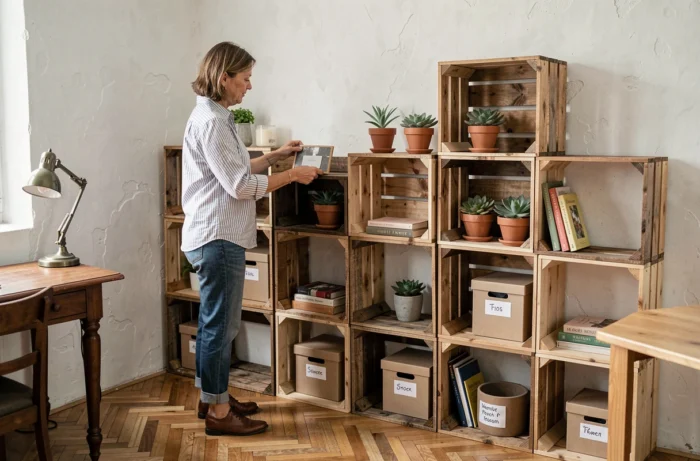
A mirror frame dressed with raw wood strips glued edge to edge creates a sculptural effect for a minimal budget. An old painter’s ladder, sanded and varnished, serves as a side shelf in a bathroom. Choosing raw wood rather than pre-treated wood gives more control over the finish, but requires careful sanding to avoid splinters, especially in living areas with children.
Which Objects Are Poorly Suited for Upcycling
Not all objects can be recycled into functional decor. The available data does not allow for an exhaustive list, but a few constants emerge from practice.
Metal food containers (cans, jugs) rust within months in humid environments, even after a consumer-grade rust treatment. DIY lighting made from non-fireproof materials poses a real safety issue, especially with incandescent or halogen bulbs.
Upcycling an object into a light fixture requires compliant wiring, which online tutorials rarely mention. A lampshade made of untreated paper or fabric placed too close to a heat source poses a documented fire risk.
DIY Trends on Social Media: Between Inspiration and Real Feasibility
DIY decor projects shared on TikTok or Pinterest generate millions of views, but their real feasibility varies significantly. A project filmed in fast motion in a 45-second video often masks several hours of work, corrected mistakes in editing, and specific tools not mentioned.
The majority of viral DIY projects require an intermediate level of tools (drill-driver, jigsaw, professional hot glue gun) that not everyone possesses. Before embarking on a project spotted online, checking the complete list of materials and estimating the actual time required helps avoid abandoning the project halfway.
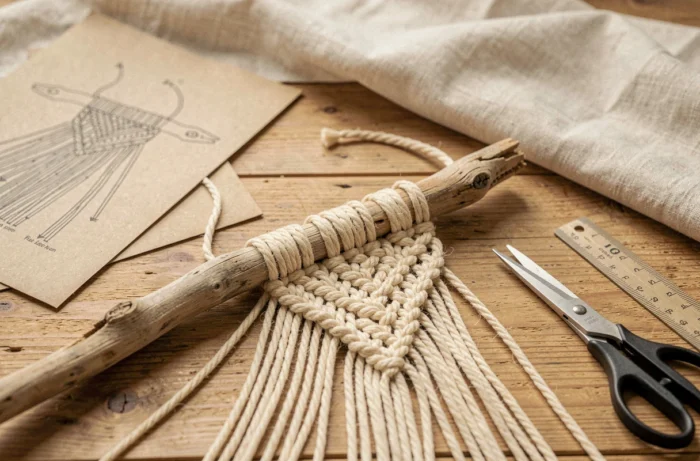
The projects best suited for beginners are those that only require paint, fabric, or paper: customizing flower pots, creating photo frames with foam board, or covering storage boxes with adhesive paper. These creative ideas for personalizing an interior do not require advanced technical skills or heavy material investment.
DIY decor benefits from being approached as a gradual process. Starting with a simple project, evaluating the result, and then increasing complexity leads to more cohesive interiors than the accumulation of disparate projects copied from different accounts. Personalizing an interior is built in successive layers, not through a total transformation in one weekend.